Private Buckaroo

One of my favorite movie genres isn’t really an official genre at all: I love the mostly forgotten, everyday movies made between 1942 and 1945. I want to see what the average American on an average day during World War II might have seen. Movies that entertained or uplifted and then, once the war ended, passed into the Past along with rationing stickers and food points and Victory mail. A few films such as The More the Merrier (1943), the plot of which revolves around the housing shortage, were Academy Award nominated. In fact, it was nominated for Best Picture and co-star Charles Coburn won for Best Supporting Actor.

On the other hand, there were many more films that played the local theaters for a week or two and disappeared. Private Buckaroo was one such. It recently played on TCM and I found it highly entertaining. Unapologetically patriotic, this 68 minute film was released on May 28, 1942, just a little under six months after Pearl Harbor was attacked, and before any Allied victory of any note had taken place. In fact, in May of 1942 there was no assurance that we would even win the war.

Devoid of plot, it was full of the Andrews Sisters and Harry James, the latter of whom opens the movie with “You Made Me Love You,” a song that had put James on the Big Band map in November of 1941. The Andrews Sisters are busy belting out quite a few songs including, “Don’t Sit Under the Apple Tree,” one of their biggest hits, as well as “Six Jerks in a Jeep.”

There are three notable supporting actors in the cast. Shemp Howard had left the Three Stooges ten years before to pursue a solo acting career, but he would join them again in 1946 after brother Jerome “Curly” Howard suffered a stroke.

Huntz Hall appeared as the company bugler who tried to teach Harry James how to blow the bugle. Hall was an original member of the Dead End Kids, a group that appeared in the drama Dead End starring Humphrey Bogart in 1938. The movie chronicles the grim existence of underprivileged juveniles in the Bowery. The Dead End Kids would evolve through a couple of iterations before becoming the Bowery Boys in 1945.

A dance troupe known as the Jivin’ Jacks and Jills also appeared in the film. Universal Studios put together this group of teens in an attempt to appeal to a younger audience. One of its members, who also had a small speaking part, was considered the weakest dancer of the bunch. Ten years later, in 1952, Donald O’Connor would be starring with Gene Kelly in Singin’ in the Rain.

This is a must-see movie for people who enjoy this “genre” or who love music history. I thoroughly enjoyed it and couldn’t help wonder throughout the movie if those who saw it in the theater had indeed escaped the fear and uncertainty of the time for at least those 68 minutes.

It is available in its entirety on Youtube. https://youtu.be/YcyiC79l910

Posted in Uncategorized, World War II | Tagged , , , , , , , | 4 Comments

Ground Crew Confidential featured on Atlanta Braves Chop Live

Lee Harvey Frazier and I had the privilege of appearing on the November 11th edition of the podcast, Atlanta Braves Chop Live. Hosted by Ray Waldheim and Sean Arias, the podcast covers a wide–and I do mean wide!–range of topics all relating to the Atlanta Braves. Basically begun as a whim after Atlanta’s 2021 World Series victory, Ray and Sean now have 45,000 followers! Ray was our interviewer on this particular episode and conducted a well-researched conversation with us. Lots of laughing and reminiscing, and those are my favorite kinds of conversations.

You can view the podcast here.

You can like the ABCL Facebook page here.

Posted in Baseball Books | Tagged , , , , | Leave a comment

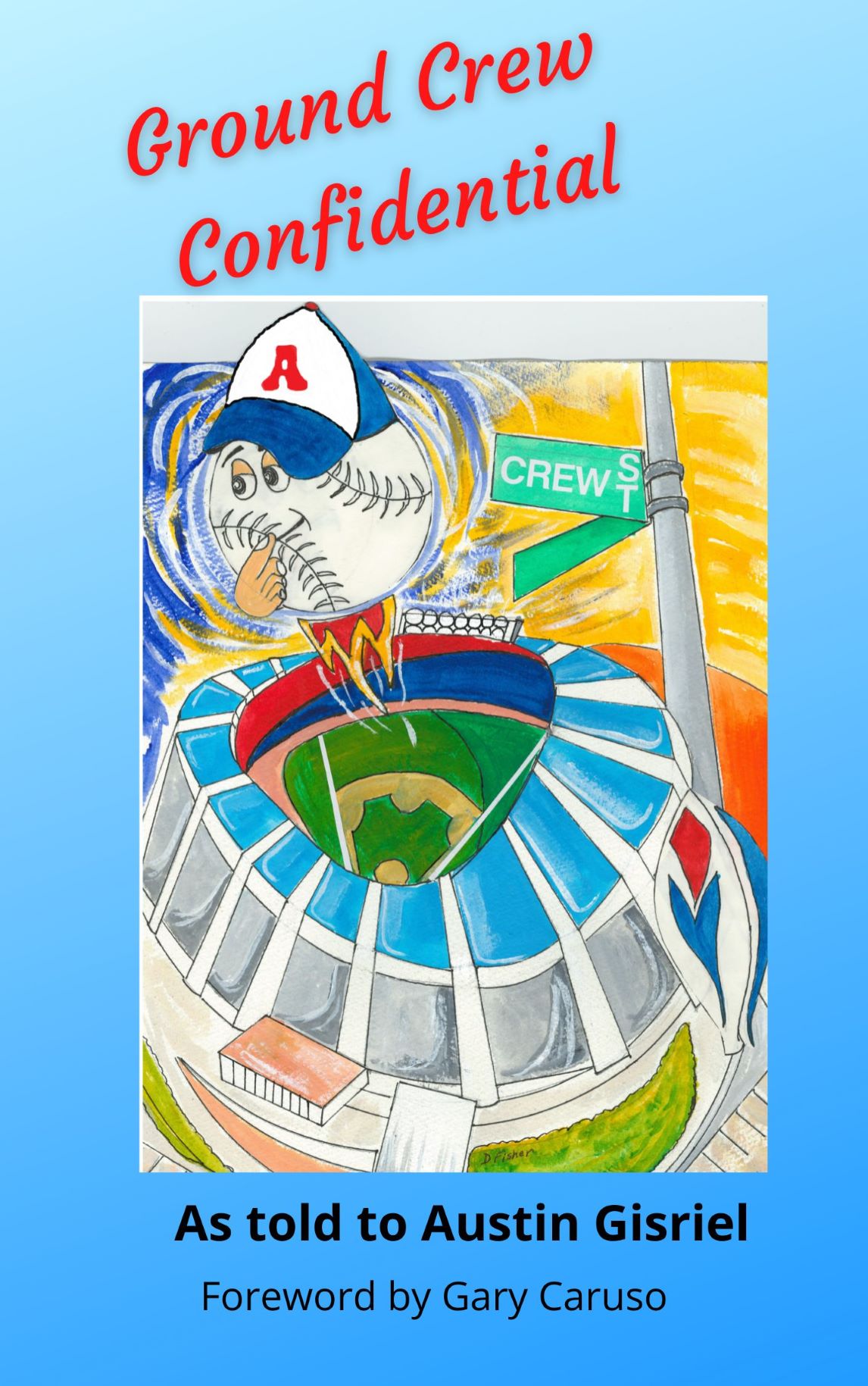
Ground Crew Confidential

I am pleased to announce that a book that I have been working on for over a year is now available through Amazon. Ground Crew Confidential is the story of four young men who worked on the ground crew of the Atlanta Braves in the 1970s. Harvey Lee Frazier, David Fisher, Clay Jackson, and Chip Moore learned about hard work from shoveling brick dust in the Georgia sun, and about leadership from Robert, their boss, “an ole country boy” who treated everyone, black and white, equally. Each of the four went on to very successful careers, and the bond they formed when their hair was long and their jeans were flared continues to grow.

Some time ago, they began to think that they should put their stories on paper, but felt that they needed an author to organize the material. Harvey worked with Martha’s cousin, Mike McDonald, and he said, “I know this guy who writes baseball books. Give him a call.” He did, and I was honored to become the “as told to” guy for Ground Crew Confidential. That is just another example of the funny ways in which Life works. It also turns out that former Atlanta Journal sportswriter, Gary Caruso, who generously contributed the foreword, got his first big story with the Journal when he interviewed the ground crew in 1974. Seem that second baseman Dave Johnson was complaining about the infield at Fulton County Stadium and the ground crew leader called with a rebuttal.The “leader” was Harvey Lee Frazier.

I am not aware of any baseball story that is told from the perspective of the ground crew, a group that is privileged to witness the historic milestones that take place inside the ballpark that it tends. By design or by accident, the ground crew may even influence those historic events, and such was almost the case in Atlanta when Hank Aaron broke Babe Ruth’s career home run record. The reckless driving of a Cub Cadet tractor nearly prevented the future Hall of Famer from even playing that night! That story and many more are revealed for the first time in Ground Crew Confidential.

Whether you’re a baseball person or you like “behind the scenes” tales, I am certain that you will enjoy this book. Consider that it shot to number four on the Amazon baseball books best-seller chart after being listed for only two days! Ground Crew Confidential is available in either paperback or e-book form. Click this link to order your copy now.

Posted in Baseball Books | Tagged , , , , , , | 5 Comments

Defining bureaucracy, courtesy of Mr. McGee

October has arrived, the month when monsters light up your television screen, haunt your neighbor’s lawn, and show up on your doorstep in miniature form asking for candy.

A nest of insidious monsters lives to the east of us here in the Shenandoah Valley. They are soulless, ever-growing beasts that have no sympathy for human beings. These ghouls are seemingly unstoppable.

I’m speaking, of course, about government bureaucracies, and I recently came across the best definition of them that I have ever heard, courtesy of Mr. Fibber McGee, of Fibber McGee and Molly, one of the most popular programs from the Golden Age of Radio. The particular episode to which I refer was broadcast in 1950, so the bureaucratic nightmare has been haunting us for a long time

Fibber has discovered that he is required to obtain a building permit for a building that is already built and he had this to say:

A bureau starts out to be a good looking, useful piece of furniture, but as time goes on it gets filled up with a lot of useless junk and gets so big for its own drawers that nobody remembers what it was designed for in the first place. By that time it’s so loaded down you can’t move it.

If truer words have ever been spoken regarding the Bureau of Virtually Anything in Washington, I haven’t heard them.

Please listen to Mr. McGee’s full description by clicking this link, then slide the play bar to time-mark 6:35. You won’t know whether to laugh or cry.

Fibber McGee and Molly
Posted in Life is Interesting | Tagged , | Leave a comment

Field of Dreams comes to life in Oakland, thanks to Steven Vogt

Baseball is a spiritual experience, and one of the aspects that makes it so is that it obliterates linear time. Baseball renders time circular, even spherical, a phenomenon perfectly illustrated by the denouement of Field of Dreams in which Ray Kinsella and his long-since deceased father play catch. Ray’s dad appears as a young man, yet perfectly aware that he is Ray’s dad. Ray now truly experiences his father as both father and as a young man before fatherhood and responsibility and time have worn him down. Linear time is completely removed from the equation, which gives “depth,” as theologian Paul Tillich described it, to their game of catch. Naturally, this removal does not bother the characters, but interestingly, it does not seem to bother the audience, either, because the audience instinctively responds to this vicarious restoration of depth. Depth, in this context, is experiencing all points of time in the present moment. When the voice tells Ray to “Build it and he will come,” the voice isn’t talking about Shoeless Joe Jackson at all. “He” is Ray’s dad.

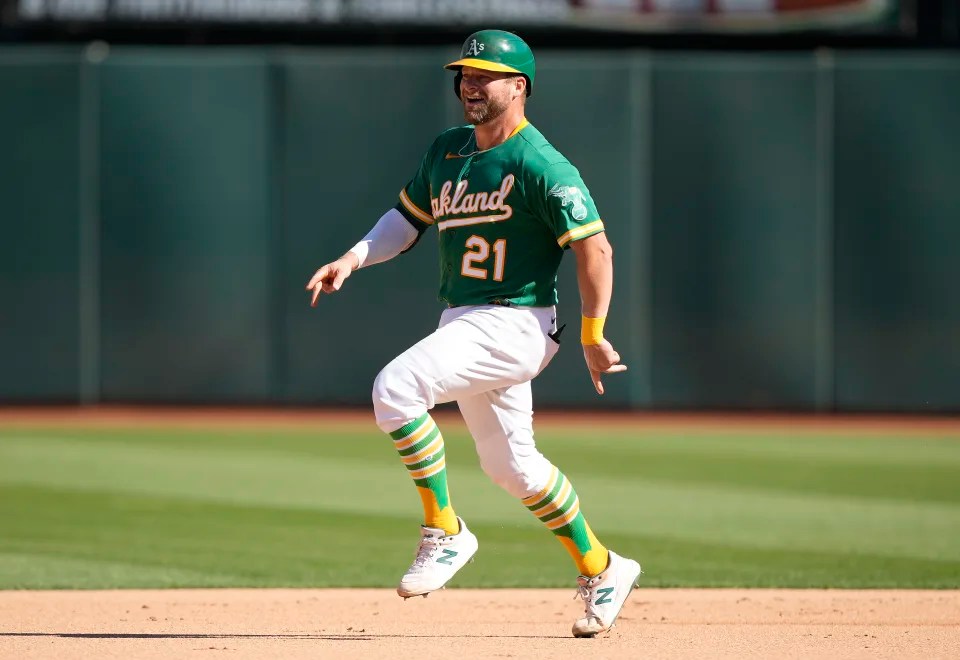
Field of Dreams played out in Oakland last Wednesday on the regular season’s final day. A’s catcher Steven Vogt began his 10 year major league career in Oakland, played for several teams, including the World Champion Atlanta Braves last year and wound up back in Oakland this season, which he announced in September, would be his last. In his first plate appearance, he was surprised and delighted to hear the voices of his three children introduce him over the stadium P.A. system. “Now batting, our dad, #21, Steven Vogt!” He looks as if he’s ready to cry as he approaches the plate. When he came to bat in the 7th inning in a 2-0 ballgame, the 37 year old dad homered. I’m not sure that it was a legal homer, because if you watch the replay, Vogt seems to float around the bases, never actually touching any of them, a grin filling the ballpark and the joy on his face brighter than the afternoon sunshine. The homer on the last at-bat of his career, launched an Oakland comeback and the A’s won, 3-2. For the record, Vogt’s homer landed in the same spot as his first career home run, which also happened to be his first major league hit.

There was Vogt, a happy dad, and a joyous little boy all at the same time. It was Ray Kinsella come to life, being an adult dad and a son and boy all in the same moment.

And by the way, there is crying in baseball.

Click here for a page which contains video of both the kids’ introduction and their dad’s home run.

Steven Vogt’s final trip around the bases.
Posted in Baseball in General | Tagged , , , , , | 8 Comments

Safe at Home: A Season in the Valley Updated 2nd edition now available

Many of you are aware that I have been working on two baseball books this summer. Ground Crew Confidential, the collective memoir of four guys who worked on the Atlanta Braves’ ground crew during the 1970s is about to be fed into Kindle Direct Publishing’s computer.

The other, which is now available, is an updated edition of Safe at Home: A Season in the Valley. So much has happened in the 13 years since I wrote Safe at Home in 2010 that I thought it was important to recognize the changes that have happened to the Rebels organization and to the league in general. Several of the most important “characters” such as Mo Weber, Bruce Alger and his wife Lynn, and ‘Front Row’ Fred Miller are no longer with us. I would also note that the players from that year are now at least 30 years of age with established careers and burgeoning families.

Several former players shared updates on their lives, as did four of our coaches. It was wonderful to hear from them and it was also wonderful to hear how much they treasure their time in the Valley. The Rebels didn’t win it all that season, but I couldn’t have had a better team to write about. Safe at Home is really the story of a community’s passion for baseball as much as it is the story of what happened on the diamond.

Many people made the original work the success that it was and I’m still just as grateful to them, as well as to the others who shared their knowledge and insight for the updated edition.

Click on the title to order either the Kindle version or the paperback of Safe at Home: A Season in the Valley, Updated 2nd edition. The paperback is priced at the original $15.00 through October 31, when it will rise to $20.00. (So, do your Christmas shopping early!)

Posted in Baseball Books, New Market Rebels | Tagged , , | 2 Comments

Patsy Montana: Another fascinating life!

Before there was Hannah Montana, there was Patsy Montana.

The former was the stage name of Miley Stewart, who in turn was the name of the character portrayed by Miley Cyrus on a very popular Disney series from 2006-2011.

The latter was the first female country singer to sell a million copies of a record, in this case “I Want to Be a Cowboy’s Sweetheart” in 1935. Just as Hannah Montana was a stage name, so was “Patsy Montana,” which was the performing moniker of Rubye Blevins. Rubye, the only girl among 11 siblings, showed an early interest in music, but it was a watermelon that led directly to her singing career. It seems that she and two of her brothers traveled to the Chicago World’s Fair in 1933 to enter a prize watermelon. While in Chicago, she auditioned as a singer and—to make a long-story short—ended up a member of the Prairie Ramblers who regularly appeared on WLS’s National Barn Dance.

Part of her repertoire was “Montana Plains,” which she altered somewhat, turning it into “I Want to Be a Cowboy’s Sweetheart.” She then adopted the “Patsy Montana” handle from Monte Montana, a silent film star and rodeo champion and poof! A million selling record and a long and prosperous career blossomed from the seed that watermelon had dropped two years before. (No word on how the melon placed in the contest.)

Patsy remained a regular on National Barn Dance until the 1950s and appeared in one movie, Colorado Sunset, along the way. The film starred Gene Autry. Patsy was inducted into the National Cowgirl Museum and Hall of Fame, as well as the Country Music Hall of Fame, and is reported to have influenced the styles of Patsy Cline and Dottie West.

The scope of our influence often outlasts the memory of our names.

Patsy married, had two daughters (who would later appear with her as the Patsy Montana Trio), and lived to be 87, having departed for the last roundup in 1996. For more details about her life, see her Country Music Hall of Fame entry or her Wikipedia page.

Thanks to regular reader Jerry Lane for bringing Patsy to my attention. I love stories about fascinating lives!

Posted in Life is Interesting | Tagged , | Leave a comment

More on Snider’s Catsup and other entries

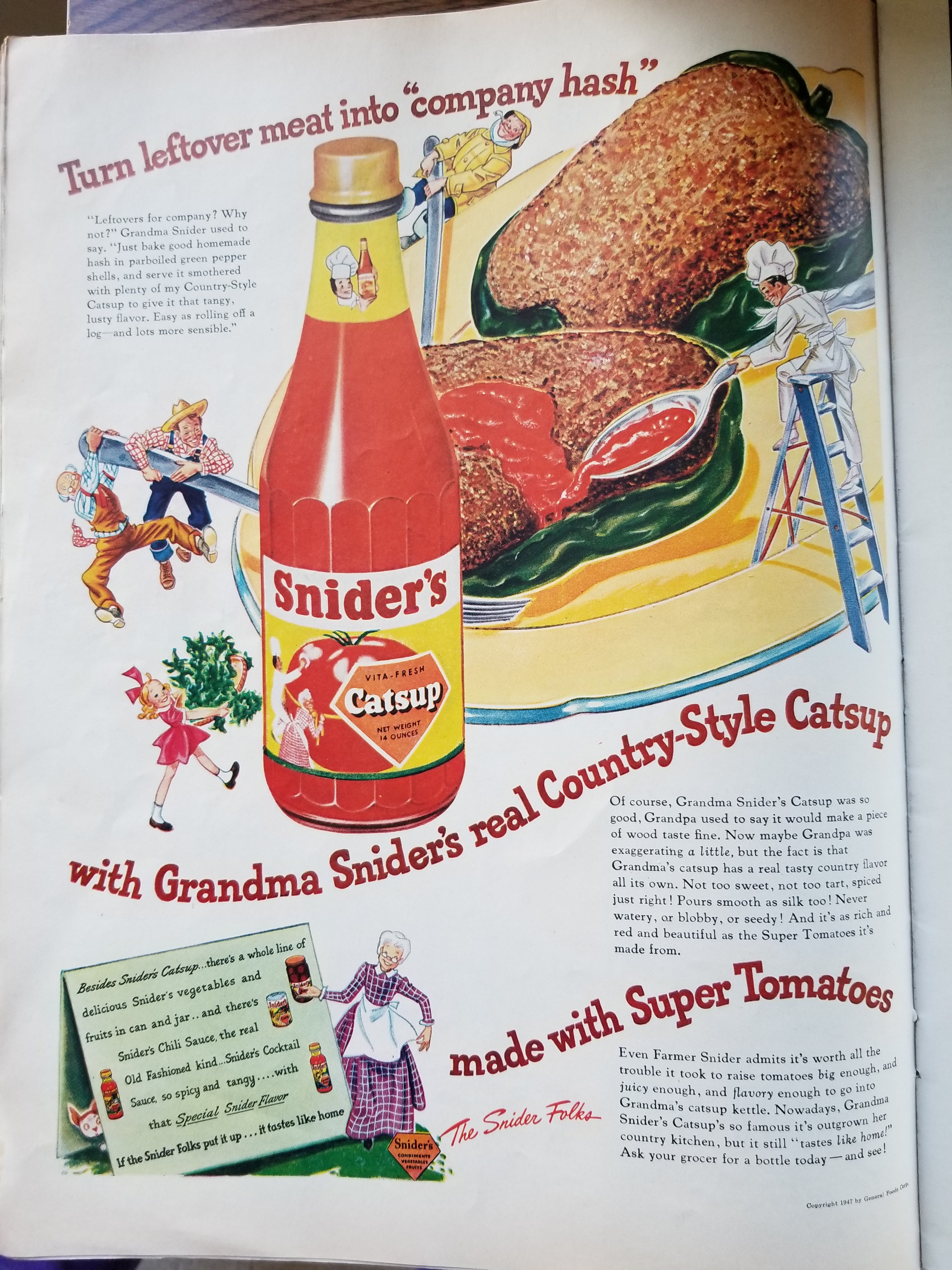
In February of 2019, I wrote an entry titled, “Anyone Remember Snider’s Catsup?” I have found over the past three and half years that the answer is yes! In that post, I asked readers to comment if they knew anything about the Snider’s brand and I have received 18 responses, most reminiscing fondly about what a tasty condiment it was. In the interest of keeping everyone up to date on the history of Snider’s, I found this post from Bay Bottles which gives a lengthy history of the company that began in Cincinnati in the 1880s. In 1943, General Foods bought what by then was known as the “Snider Packing Corporation.” In 1953, Hunt Foods bought the Snider business and label and according to Bay Bottles, ads for Snider’s Catsup continued to appear into the 1970s.

No details on when it officially ceased to be a brand, but for all you Snider’s fans out there, the Bay Bottle post is very informative.

Below is a photo of the 1947 ad that originally piqued my interest.

It is fascinating to see which of my posts in the past 10 years have generated the most visits. The top four are all whimsical pieces, such as “Anyone Remember Snider’s Catsup?” which has had 890 visitors. In fact, it is Number 4. Number 3 is “Randolph Scott’s Hat” with 1,485 visitors since 2015. The runner-up is “The Third Man May Have Been SpongeBob,” which chronicles my discovery that the theme from the Orson Welles movie, The Third Man was used as the theme for SpongeBob Square Pants—2,384 views since 2016. My most popular post by far and away, however, is a 2012 piece titled, “It’s a Grocery Store! No, It’s a Sex Shop! No, It’s Both!” which has been visited 12,782 times and from people all over the world. Rarely a day goes by that there is not at least one visitor. (If you’re wondering, the post is about the Oak Hill Grocery Store which is on Route 7, halfway between Winchester and Berryville.) This goes to prove that sex indeed sells. Considering how often the word sex appears all over the Internet, you have to wonder just how far that guy in Malaysia had to scroll in his search engine to come upon my contribution to the subject. Do people out there plan their vacations around what sex shops are in the area? In fairness, maybe all those folks were seeking area grocery stores. It has to be one or the other because, let’s face it: How many combination sex shop/grocery stores can there be in the world?

In any case, it is interesting to me to see what people most enjoy reading about. I thought you’d find this interesting, too.

Posted in Life is Interesting | Tagged , , , , | 4 Comments

Perspective

Here’s an interesting notice in the Winchester Star’s most recent “Out of the Past” column from August 11, 1947. It seems that the temperature that day reached 97° at 2:00 p.m. The paper called the Winchester Research Laboratory and “opened the conversation with ‘Isn’t this a scorcher?’ Dr. A. B. Groves shot back, ‘This is nothing brother, back in 1930 the temperature in Winchester shot to 107 during August.’”

Dr. Groves then stated “in rapid fire order” that the temperature had hit an even 100° in 1936, 1937, and 1943 and “in August of 1932 the temperature rose to 102, in 1924, 103; and in 1918 and 1926 it reached 106.”

Winchester citizens had an interesting name for this phenomenon of extreme heat in August back in those days: They called it “summer.”

Those lazy, hazy, crazy days of summer
Posted in Uncategorized | Tagged , , , , | Leave a comment

Stories Over Stats

While on our way to breakfast Saturday morning, the subject of former Oriole, now newest member of the Houston Astros, Trey Mancini, came up. All of Orioledom was sad to see Trey go, but happy that his first three hits for Houston were all home runs, including a grand slam. You don’t even have to be a baseball fan to know that Mancini had to sit out the 2020 season while undergoing treatment for Stage 3 colon cancer. I remarked to Martha that “Baseball needs more Trey Mancinis and fewer Alex Rodriguezes.” And therein lies the core problem with Major League Baseball.

MLB seems to think that the sport is all about glitz and glamor and launch angles and spin rates and clown costumes for uniforms (hello, San Diego). The ad men who run the sport don’t realize that baseball has never been about that. It’s always been about the stories, which are always more interesting than statistics.

I have nothing against Shohei Ohtani. A strong case can be made that he’s the best player in baseball today and that he and Babe Ruth are the two greatest two-way players in baseball history. He seems like a nice kid and I’ve never heard anything bad about him. I’ve never heard his story, either. If he has one. Same with his teammate, Mike Trout, a future Hall of Famer, but what do I care about him? I wish him well, but frankly, he’s just not that interesting. Mickey Mantle, on the other hand, now he was interesting! Here was this 19 year old switch-hitting country boy, named after Hall of Famer Mickey Cochrane, who was so fast, he was dubbed the “Commerce Comet,” his home town being Commerce, Oklahoma, playing under the brightest of lights in Yankee Stadium. So fast, yet powerful enough to hit balls completely out of ballparks. Off the diamond, New York’s bright lights overwhelmed the kid and his demons often threw high-hard ones past him. But in the end, there was redemption and thousands—more like millions—of middle-aged kids wept at the news of his death.

If Ohtani and Trout and most of the current crop of ballplayers have stories, start telling them. Otherwise, they will be remembered, but not revered, and if baseball loses its sense of reverence for The Past, it loses an important part of itself.

Every season is a new chapter in a never-ending book that requires interesting characters if we’re going to keep reading. For the past five years, Oriole fans couldn’t bear to watch the team, but we all rooted for Trey Mancini because of his compelling story.

This past week, all of baseball mourned the death of Dodger play-by-play man, Vin Scully. He was so beloved because he was a master-story teller. His description of each game—and each game is a story unto itself—bordered on poetic. He called Dodger games from the time Jackie Robinson played through the Clayton Kershaw era. Is anyone going to stand up at his funeral and say, “Boy, the statistics he could spout”?

The average spin rate on a major league four-seam fastball is 2,143 RPM. What does that even mean? I have no context for that. On the other hand, when Chuck Thompson, Baltimore’s own, beloved wordsmith, would say of Cleveland’s Lee Stange, “He can throw a strawberry through a battleship,” I knew what he’s talking about! And, I have remembered that image for going on 55 years now. It was a one-line story, but a powerful story, nonetheless.

If you want this game to thrive, tell us the stories. Give us the story of Nolan Ryan’s fastball at age 45; give us more Earl Weaver and Jim Palmer. Tell us the tale of what might have been with Steve Dalkowski and Pete Reiser. Tell us about the momentary glory of Gomer Hodge. Tell us about how Trey Mancini overcame Stage 3 colon cancer and how he hit a home run his last time at bat in Camden Yards and how he started the next phase of his career in Houston with three long balls.

Tell us good stories if you want us to stick around.

Trey Mancini has lots to smile about these days.
Posted in Baseball in General | Tagged , , , , , , , , , , , , , | 2 Comments